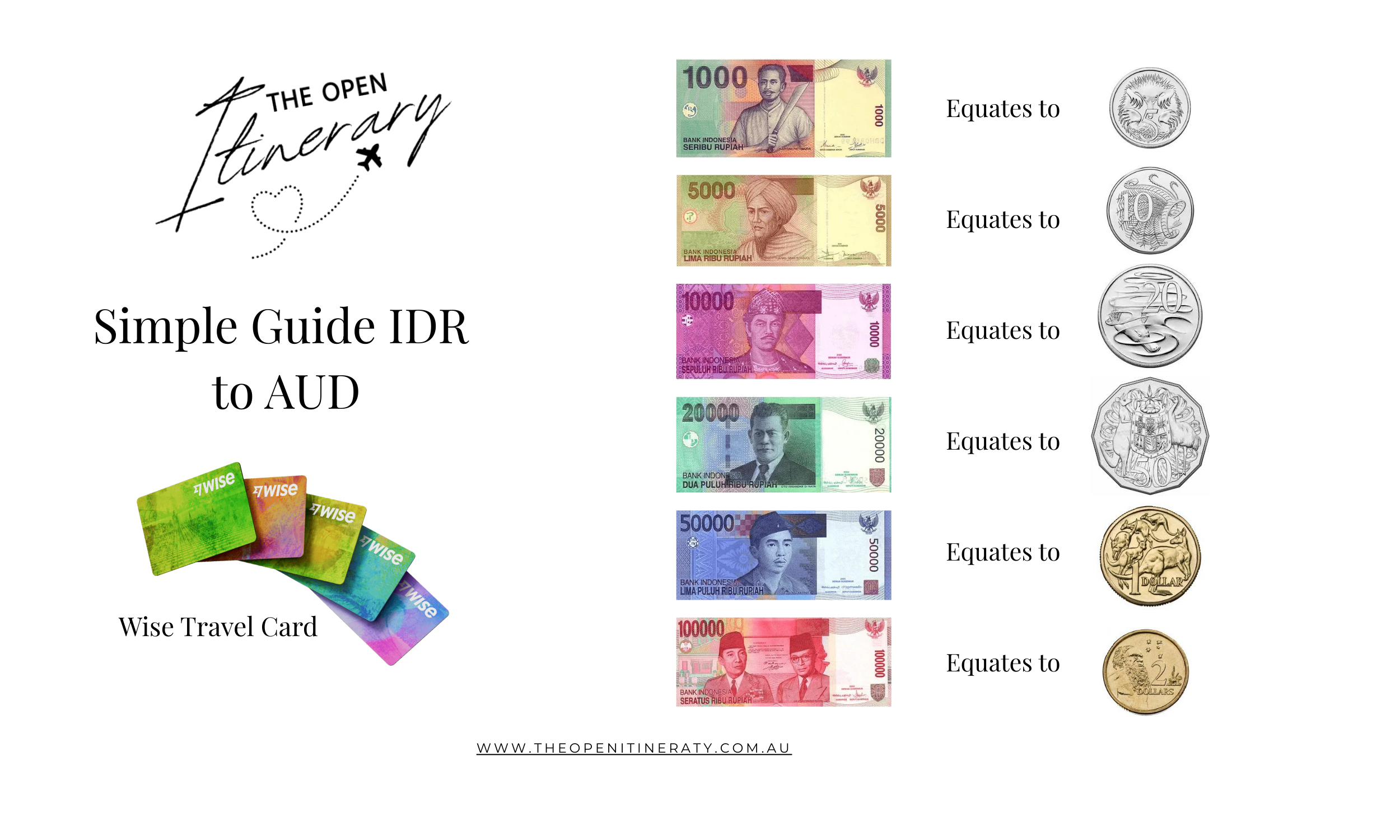
A simple guide of Indonesian Currency for Aussies
Ah yes. The moment every Aussie lands in Bali and suddenly questions their ability to count.
Australian dollars are calm. Logical. Respectable.
Indonesian Rupiah? Absolute chaos (in a fun way).
Right now, $1 AUD equals roughly 10,000–12,000 IDR, which means:
A 50,000 IDR coffee; $4–$5 AUD
A 150,000 IDR massage; $12–$15 AUD
A 1,000,000 IDR villa night; $80–$90 AUD
So yes — you’ll be handling notes with a lot of zeros, but no — you haven’t accidentally become Bali-rich.
Quick things to know before you start wildly handing over cash:
Rupiah notes come in large denominations, so prices look scary before they’re actually scary.
ATMs usually spit out 1–3 million IDR at a time, which feels like a win until you remember it’s still your money.
Shops often round amounts, so carrying small notes is elite-level Bali behaviour.
Always do a very quick AUD conversion at first… until you hit day three and trust vibes instead.
The exchange rate will make you feel powerful.
Your budgeting app will keep you humble.
Welcome to Bali — where you’re technically a millionaire, but still asking,
“Wait… is this cheap or am I being tricked by the zeros?”
When travelling overseas, I always make sure I have at least $300 in the local currency before I land. I don’t enjoy arriving somewhere new and immediately hunting down an ATM like I’m on a low-budget reality show.
When it comes to Bali, you’ll hear approximately 47 different opinions on the “best” way to get Rupiah.
I am a creature of habit.
I grab a small amount of cash at the airport in Australia before I fly out. Not a fortune — just enough to cover transfers, snacks, and that first “I’m on holidays” Bintang moment. After that, I make sure I know where a reputable money exchange is located near my accommodation so I can top up as needed.
I also use a Wise card, which is a well-known travel card that automatically converts the exchange rate for you. You simply load it up in AUD, and it converts to IDR when you tap or withdraw. No mental gymnastics. No panic maths. Just tap and go.
Most restaurants and larger stores in Bali have card facilities these days, but smaller Indonesian markets and local vendors still prefer cash. Cash is king in many places — especially if you want smoother transactions (and sometimes better prices).